Beginner’s Glossary of AI Terminology
About the author
Ashwini X
I’m an AI tutor at iMeta, where I teach AI and digital skills to adult learners who are new to technology, including those switching careers, parents returning to work and people who may not have worked with digital tools before.
In my sessions, I regularly see how confusing AI language can feel at first! Terms like algorithm, model or machine learning often sound abstract or intimidating. A big part of my role is helping people unpick those assumptions and connect new concepts to things they are already familiar with, such as messaging apps or everyday workplace tasks.
How to use this glossary
If you’re new to AI or digital skills, it’s completely normal to feel overwhelmed by the language.
Many AI terms sound abstract or technical because they’re rarely explained in everyday language!
This glossary is designed to:
- Explain each term simply
- Use real-life analogies, not technical jargon
- Showcase common misunderstandings, so you don’t feel “behind”
- Show why the term matters in real tools, workplaces and decisions
All explanations reflect questions, misconceptions and examples that regularly arise in our taught sessions.
Did you know that sector-specific AI skills are built into every course at iMeta as part of our support for the West Midlands AI Skills Initiative?
The Glossary
Algorithm
Simple definition
An algorithm is a set of step-by-step instructions that a computer follows to complete a task or solve a problem.
How to think about it
An algorithm is like a recipe. If you follow the steps in the right order, you get a result, whether that’s baking a cake or sorting a list of names.
A common misunderstanding
Many beginners think an algorithm is a piece of software or a complicated AI system. In reality, it’s just the rules being followed. The same algorithm can be used in a simple spreadsheet or a powerful AI tool.
Why this matters in real life
Algorithms decide lots of things like how emails are sorted, how search results are ranked, and how recommendations are made. Understanding that they follow rules (rather than “thinking”) helps you question results more confidently.
API (Application Programming Interface)
Simple definition
An API is a safe way for two apps or systems to talk to each other and share information.
How to think about it
An API is like a bridge or messenger that lets one system ask another system for information and get a response.
A common misunderstanding
Many beginners think APIs are something users interact with directly. In reality, APIs work quietly in the background to connect systems together.
Why this matters in real life
APIs allow tools like chatbots, dashboards and apps to pull in data from other platforms, making modern digital services work smoothly together.
Anonymisation
Simple definition
Anonymisation is the process of removing personal details from data so individuals cannot be identified.
How to think about it
It’s like removing names and contact details from a spreadsheet before sharing it.
A common misunderstanding
People can think anonymised data can always be traced back to individuals. Proper anonymisation is designed to prevent this.
Why this matters in real life
Anonymisation helps organisations use data responsibly while protecting privacy, especially in healthcare, research and customer analysis.
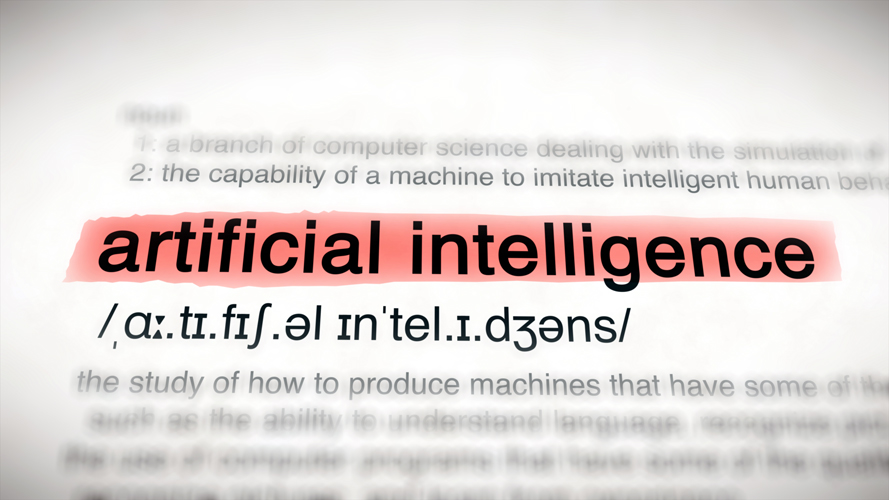
Artificial Intelligence (AI)
Simple definition
Artificial Intelligence (AI) is when computers perform tasks that normally require human judgement, such as recognising patterns, understanding language or making predictions.
How to think about it
AI doesn’t think like a human. Instead, it learns from examples and training data, similar to how people learn by practising something repeatedly.
A common misunderstanding
AI is often imagined as being human-like or all-knowing. In reality, AI systems are narrow, limited and only as good as the data and instructions they’re given.
Why this matters in real life
AI is already part of everyday life, from voice assistants and photo tagging to fraud alerts and chatbots. Knowing what AI can and can’t do helps people use it safely and realistically.
Automation
Simple definition
Automation is when a task runs automatically once it has been set up, without needing ongoing human input.
How to think about it
Automation is like setting an alarm or scheduling a message. Once it’s configured, it keeps working on its own.
A common misunderstanding
Automation is often confused with AI. Automation follows fixed rules, while AI can adapt and improve using data.
Why this matters in real life
Many workplace tools rely on automation to save time on repetitive tasks such as sending emails, updating records or generating reports.
Bias (in AI)
Simple definition
Bias in AI means unfair or inaccurate results caused by unbalanced or misleading data.
How to think about it
If you learn from incomplete or skewed examples, your conclusions will also be skewed. AI works the same way.
A common misunderstanding
Bias is often thought of only as intentional discrimination. In AI, bias can also mean missing data or patterns that don’t represent reality properly.
Why this matters in real life
Bias can affect hiring tools, loan decisions and customer experiences. Recognising bias helps people question AI outputs instead of assuming they’re neutral.
Chatbot
Simple definition
A chatbot is a program that talks to users using text or voice to answer questions or perform tasks.
How to think about it
A chatbot is like a digital assistant that follows rules or learned patterns to respond to questions.
A common misunderstanding
People often assume chatbots understand meaning in the same way humans do. In reality, they match patterns and probabilities.
Why this matters in real life
Chatbots are used for customer support, internal help desks and booking systems, saving time for both users and organisations.
Cloud Computing
Simple definition
Cloud computing means storing and running files or applications online (in the cloud) instead of on your own device.
How to think about it
It’s like storing photos in Google Photos or backing up messages on WhatsApp instead of keeping everything on your phone.
A common misunderstanding
Many people assume the cloud is automatically secure. Security still depends on how systems are set up and managed.
Why this matters in real life
Cloud systems allow people to work remotely, share files easily and scale digital tools without buying physical hardware.
Data
Simple definition
Data is information that computers use to learn or make decisions, such as text, numbers, images or video.
How to think about it
Data is like raw ingredients. On its own it doesn’t do much, but it’s essential for everything else to work, like AI. All of us encounter and interact with multiple pieces of digital data every single day.
A common misunderstanding
Data is often assumed to be objective or “clean”. In reality, data can be incomplete, outdated or misleading, which can cause issues when it is used as part of processes or decision-making.
Why this matters in real life
Better data leads to better decisions in business, healthcare, finance and everyday digital tools.
Dataset
Simple definition
A dataset is a structured collection of data, like a spreadsheet full of examples.
How to think about it
A dataset is a folder of organised information that an AI system learns from.
A common misunderstanding
Bigger datasets aren’t always better. Quality and relevance matter more than size in most cases.
Why this matters in real life
Datasets shape how AI and automated systems behave. Poor datasets lead to poor results.
Deployment
Simple definition
Deployment is when an AI tool or system is released so real users can start using it.
How to think about it
It’s the moment something moves from being tested behind the scenes to being used in the real world.
A common misunderstanding
People often think AI work ends once a model is built. In reality, deployment is where many practical challenges begin.
Why this matters in real life
Deployment is how AI solutions move from classroom projects into real workplace tools.
Ethics in AI
Simple definition
Ethics in AI refers to guidelines and principles that help ensure AI is used fairly, safely and responsibly.
How to think about it
It’s about stopping to ask, “Should we do this?” not just “Can we do this?”
A common misunderstanding
Ethics is sometimes seen as optional or theoretical. In practice, ethical decisions affect real people and outcomes.
Why this matters in real life
Ethical AI helps prevent harm, build trust and ensure technology benefits everyone, not just a few groups.
Generative AI
Simple definition
Generative AI is a type of AI that creates new content, such as text, images, audio or code.
How to think about it
It’s like a system that learns patterns from examples and then produces something new based on those patterns.
A common misunderstanding
People often assume generative AI is being creative in a human way. In reality, it recombines patterns it has seen before.
Why this matters in real life
Generative AI powers tools like chat assistants, image generators and writing aids used in everyday work.
Hallucination
Simple definition
A hallucination is when an AI system produces incorrect or made-up information but presents it confidently.
How to think about it
It’s like someone guessing an answer instead of saying “I don’t know”.
A common misunderstanding
People often assume confident answers are correct. With AI, confidence does not always equal accuracy.
Why this matters in real life
Understanding hallucinations helps users double-check information instead of trusting outputs blindly.
Labelled Data
Simple definition
Labelled data is data that includes correct answers or categories, such as images tagged “cat” or “dog”.
How to think about it
It’s like a worksheet where the answers are already filled in to help with learning.
A common misunderstanding
People often underestimate how much human effort goes into labelling data correctly!
Why this matters in real life
Labelled data is essential for training many machine learning systems accurately.
Large Language Model (LLM)
Simple definition
A large language model (LLM) is an AI system trained on huge amounts of text to understand and generate human-like natural language.
How to think about it
It’s like a very advanced text-prediction system that guesses what words should come next.
A common misunderstanding
LLMs are often assumed to understand meaning or truth. They predict language patterns, not facts.
Why this matters in real life
LLMs sit behind many chatbots and AI writing tools people interact with daily, like Perplexity or ChatGPT.
Machine Learning (ML)
Simple definition
Machine learning is a type of AI where systems learn from data and improve over time without being manually programmed.
How to think about it
It’s like learning from experience instead of being given fixed instructions.
A common misunderstanding
Machine learning does not mean the system understands context or intent like a human.
Why this matters in real life
Machine learning powers recommendations, predictions and pattern recognition across many industries.
Model
Simple definition
A model is a trained AI system that has learned how to perform a specific task.
How to think about it
A model is the “finished version” of AI after training, ready to be used.
A common misunderstanding
Models are often assumed to be perfect. In reality, they make the best guess based on past data.
Why this matters in real life
Models are used in tools like chatbots, dashboards and forecasting systems.
Neural Network
Simple definition
A neural network is an AI system inspired by the human brain that helps recognise patterns in data.
How to think about it
It’s made up of connected layers that gradually learn what matters most in the data.
A common misunderstanding
Neural networks don’t think or reason like humans, despite the name.
Why this matters in real life
Neural networks are used in image recognition, voice assistants and recommendation systems.
Prediction / Predictive Model
Simple definition
A prediction is an AI system’s best guess about what may happen, based on historical data.
How to think about it
It’s similar to a weather forecast, useful, but never guaranteed!
A common misunderstanding
Predictions are often assumed to be correct. They are probabilities, not promises.
Why this matters in real life
Predictions support decisions across multiple industries and departments, including finance, healthcare, logistics and marketing.
Prompt Engineering
Simple definition
Prompt engineering is the skill of writing clear instructions to get better results from AI tools.
How to think about it
It’s like learning how to ask better questions.
A common misunderstanding
People assume AI “knows what you mean”. Clear prompts make a huge difference.
Why this matters in real life
Better prompts lead to more accurate, useful and reliable AI outputs.
Sentiment Analysis
Simple definition
Sentiment analysis is when AI detects emotion or tone in text, such as positive, negative or neutral.
How to think about it
It’s like guessing whether a message sounds happy, frustrated or upset based on clues like phrasing and specific wording.
A common misunderstanding
Sentiment analysis is not perfect and can struggle with sarcasm or context.
Why this matters in real life
It’s used to analyse reviews, feedback and customer messages at scale.
Training Data
Simple definition
Training data is the set of examples used to teach an AI system how to perform a task.
How to think about it
It’s like practice material that helps the system learn what to look for.
A common misunderstanding
People often assume AI learns from the internet in real time. Training usually happens in batches before the system is released.
Why this matters in real life
The quality of training data directly affects how accurate and fair an AI system is.
Token
Simple definition
A token is a small piece of text, a whole word or part of a word that AI models read and process.
How to think about it
AI doesn’t read text the way people do. It breaks text into smaller chunks to work with it.
A common misunderstanding
People assume AI reads sentences like humans. In reality, it processes tokens mathematically.
Why this matters in real life
Understanding tokens helps explain limits like input length and why AI responses can vary.
Workflow Automation
Simple definition
Workflow automation uses digital tools to complete routine tasks automatically.
How to think about it
It’s like setting up dominoes. Once started, the steps follow automatically.
A common misunderstanding
Automation doesn’t mean removing humans entirely; it supports them in taking away the grunt work.
Why this matters in real life
Workflow automation improves efficiency and reduces repetitive manual work.
Understanding the language is often the hardest first step in learning a new skill!
Our courses are designed to build on that foundation, combining clear explanations with hands-on practice so all learners can apply AI and digital skills in real situations, at a pace that feels manageable.
View our couhttps://imetatraining.co.uk/practical-ai-for-business/rses
